High-volume halls and the physics of stratification
Sports halls differ fundamentally from offices. Ceiling heights of 7 to 12 metres (specified in standards such as DIN 18032 and Sport England sports hall design guidance) create vast air volumes where warm air naturally rises toward the roof deck while athletes play at floor level. Without destratification fans or radiant ceiling panels, convective heating systems frequently overheat the upper roof space by 4°C to 8°C merely to maintain 16°C at court level.
Furthermore, activity levels dictate lower target air temperatures than sedentary spaces. A badminton or indoor football hall typically operates comfortably between 14°C and 18°C, whereas a yoga studio or spectators' concourse requires warmer setpoints. When a single air-handling unit serves zones with conflicting thermal needs, simultaneous heating and cooling—known as fighting controls—can occur undetected until supply and return temperatures are plotted side by side.
Ventilation demand: balancing air quality against fan power
Ventilation protects athlete health and removes moisture, body heat and carbon dioxide. Guidance under ASHRAE Standard 62.1 and European ventilation standards specifies minimum outdoor air flow rates per occupant and per floor area. However, occupancy in a gym or arena swings violently: a hall may hold 12 morning badminton players at 10:00 and 1,800 spectators at 20:00 (as routinely occurs in multi-purpose venues like St. Jakobshalle in Basel or Palau Sant Jordi in Barcelona).
Because fan power scales roughly with the cube of rotational speed (the fan affinity laws), running a constant-volume supply fan at 100% speed during low-occupancy hours consumes disproportionately high electrical energy while needlessly conditioning outdoor air. Demand-Controlled Ventilation (DCV), modulated by calibrated CO2 and relative humidity sensors over BACnet or KNX, allows variable-speed drives to trim airflow when rooms are lightly used. AI monitoring complements DCV by tracking whether fan speed actually responds to falling CO2 levels—catching stuck dampers, fouled filters and sensors that drift out of calibration.
Swimming enclosures and domestic hot water loops
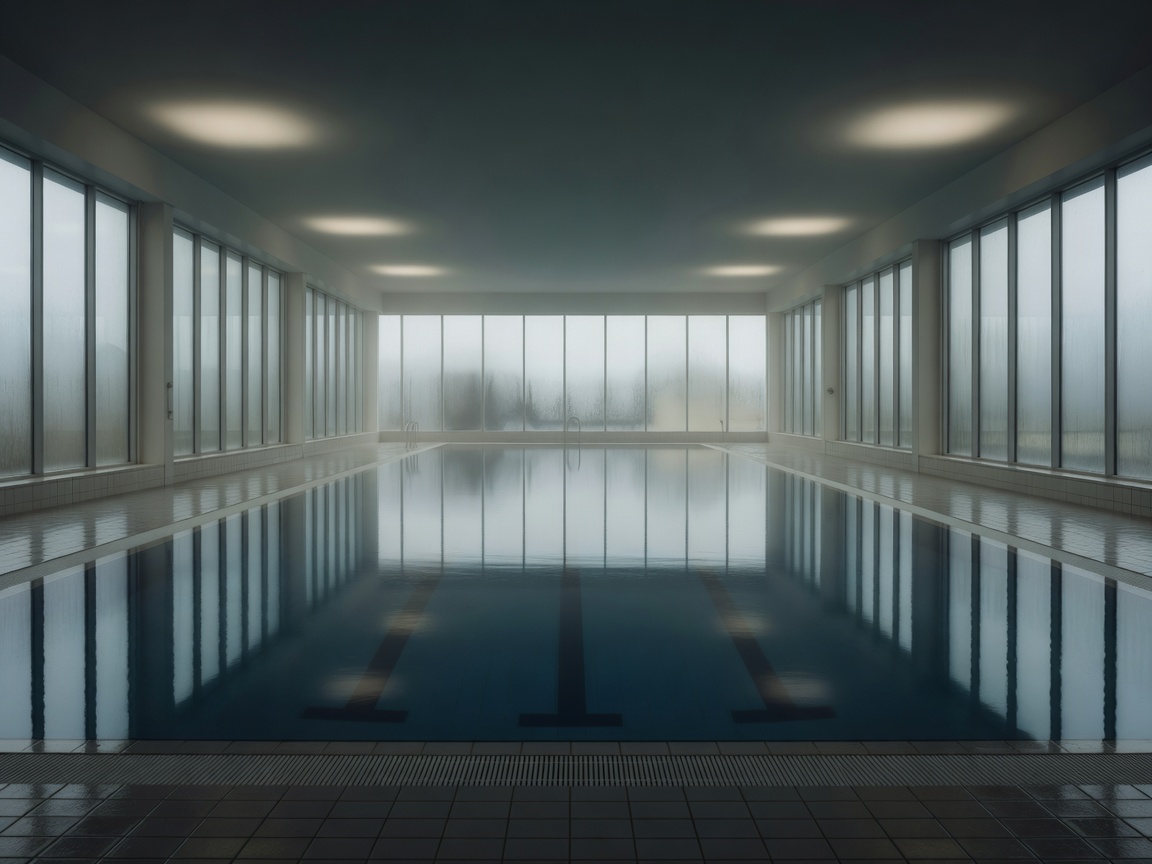
Where a training centre includes a swimming pool, thermal dynamics shift again. Water evaporates continuously from the pool surface, especially when swimmers agitate the water or when thermal pool covers are left retracted overnight. That moisture must be removed via heat-recovery dehumidification units to prevent structural corrosion and condensation on glazing. Monitoring supply air dew-point alongside heat-recovery wheel efficiency helps operators distinguish genuine bather load from an open bypass damper.
In dry gyms and stadium changing blocks, domestic hot water (DHW) introduces sharp evening peaks followed by long periods of circulation loss. Recirculation loops must maintain temperatures safely above Legionella proliferation thresholds, yet oversized pumps or poorly insulated return pipes lose substantial heat 24 hours a day. Examining gas or heat-pump demand during unoccupied night windows isolates standing distribution losses from actual shower usage.
Optimal start, pre-heat inertia and weather compensation
Heavy masonry and concrete arenas possess significant thermal mass, a property explored extensively by the Passivhaus Institut in Darmstadt in its studies of low-energy sports halls. Starting boilers at a fixed 04:00 timer regardless of whether the morning outdoor temperature is −3°C or 14°C wastes pre-heat hours on mild days. Weather-compensated flow temperatures and adaptive optimal-start algorithms learn how quickly each zone warms under different outdoor conditions, nudging start times closer to first occupancy without risking a cold hall for early swimmers or club sessions.